Remote Access to a Mac Behind CGNAT: What Works (2026)
You can reach a Mac behind CGNAT by making the Mac connect outward instead of waiting for inbound connections. Two methods do this: a mesh VPN such as Tailscale, or a tunnel such as Cloudflare Tunnel.
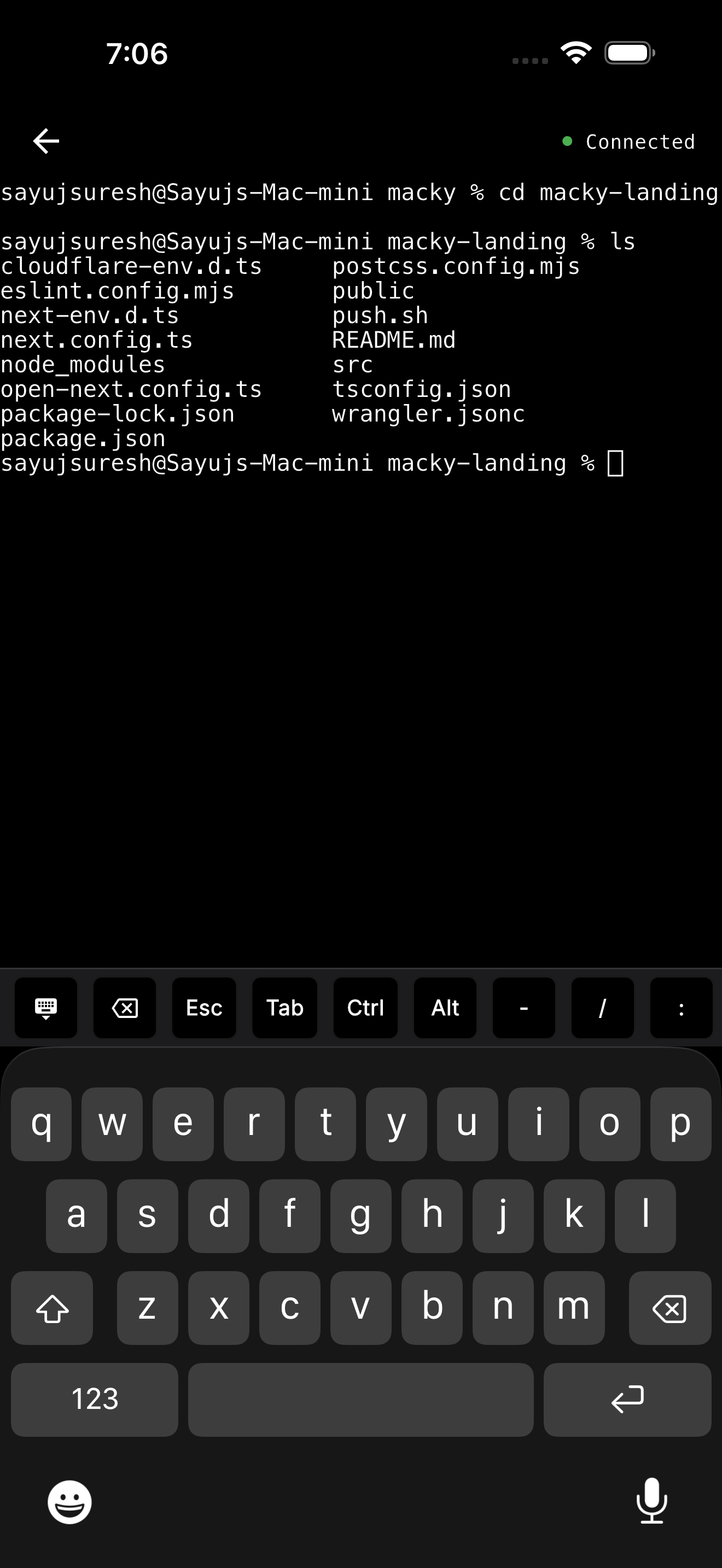
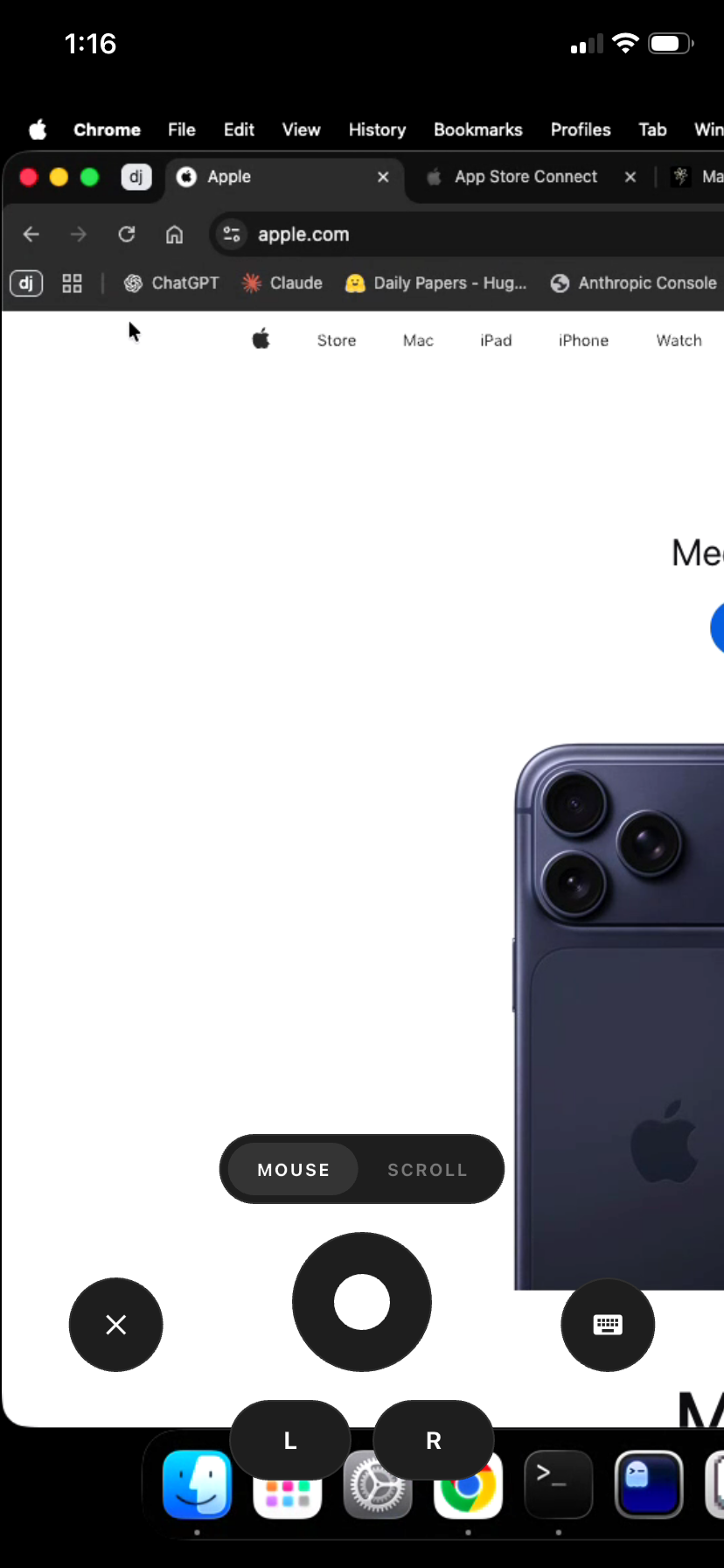
Macky takes the same outbound approach: it puts your Mac's terminal and screen on your iPhone, end-to-end encrypted, with no open ports.
Why port forwarding fails behind CGNAT
CGNAT (carrier-grade NAT) means your ISP shares public IP addresses across many customers. Port forwarding needs the internet to reach your router, and under CGNAT your router never gets that traffic.
Any setup that depends on an inbound path breaks here. The fix is to have your Mac open the connection itself.
Option 1: A mesh VPN (Tailscale)
Tailscale makes outbound connections from both devices and tries to build a direct peer-to-peer link between them. Its coordination server and DERP relay servers help set that link up.
If the direct link fails, traffic falls back to a DERP relay. Tailscale lists CGNAT among the conditions that can cause this. Relayed connections generally have worse throughput and latency than direct ones, but Tailscale says the vast majority of its traffic flows directly between peers.
Option 2: A tunnel (Cloudflare Tunnel)
The cloudflared connector on your Mac creates outbound-only connections to Cloudflare's network. It uses port 7844 (TCP or UDP) with HTTP/2 or QUIC, and it opens four connections to four servers across at least two data centers.
Cloudflare says Tunnel works without a publicly routable IP address. It lists HTTP web servers, SSH servers, and remote desktops among the things you can connect.
Reach your Mac from your iPhone without router changes
Both methods need an account, an install on your Mac, and some setup on each device you connect from. Macky skips the network layer entirely.
You get a real terminal and your Mac's screen on your iPhone, end-to-end encrypted. Nothing needs an open port or a router change. Access is protected by a master password and device approval.
For how NAT affects each connection type, read WebRTC vs SSH for Remote Terminal Access.
Which one to pick
| Tailscale | Cloudflare Tunnel | |
|---|---|---|
| Connection direction | Outbound from both devices | Outbound from your Mac to Cloudflare |
| Needs a public IP | No (falls back to relay when direct fails) | No |
| Relay behavior | DERP relays as fallback | Traffic goes through Cloudflare's network |
This brief doesn't cover Mac-specific setup for SSH or Screen Sharing through either tool. Check each vendor's docs before you build on it.
Related guides
- Tailscale vs Cloudflare Tunnel vs Macky for a side-by-side comparison
- How to SSH into a Mac to turn on Remote Login
- Chrome Remote Desktop on Mac for a browser-based option
- Does Apple Remote Desktop Work Over the Internet? for Apple's own tools
FAQ
Is there a way to get around CGNAT?
Yes. Make your Mac connect outward instead of waiting for inbound connections. A mesh VPN such as Tailscale or a tunnel such as Cloudflare Tunnel does this, and neither needs a publicly routable IP address.
Does Tailscale work behind CGNAT?
Yes. Tailscale's own posts say it tries a direct peer-to-peer connection first and falls back to its DERP relay servers when CGNAT or a restrictive firewall blocks that. Relayed connections generally have worse throughput and latency.
Does port forwarding work behind CGNAT?
Usually not. Port forwarding needs connections to reach your own router from the internet, and under CGNAT your ISP's equipment sits in front of it. Use an outbound-only method instead.
Can I bypass CGNAT with a VPN?
A mesh VPN such as Tailscale can, because both devices connect out and the service sets up the path between them. Cloudflare Tunnel takes a similar approach with a single outbound connection from your Mac.
Related Guides & Comparisons
Try Macky
Connect to your Mac terminal from your iPhone.