Moshi App iOS Review and Alternatives (2026)
Moshi is an iPhone terminal app that connects to your own computer over SSH or Mosh. It's built for running Claude Code, Codex, and other coding agents from your phone. It fits you if you want Mosh and agent notifications and don't mind setting up a host first.
If your host is a Mac, Macky puts your Mac's terminal and screen on your iPhone over an end-to-end encrypted WebRTC connection. There are no open ports and no VPN.
This review rests on Moshi's docs, its App Store listing, and two positive third-party write-ups. We found no independent reports of bugs or battery use. Reliability is unproven either way.
What Moshi Does
- Your shell and repos stay on your host. So do tmux sessions and agent subscriptions. Moshi doesn't run your code.
- Hosts can be macOS, Linux, or Windows with WSL.
- Transports are SSH, Mosh, or Eternal Terminal. Each saved connection can be set to Auto or a specific transport.
- The App Store listing says it needs iOS 18.0 or later.
- Per the listing, SSH keys sit in the iOS Keychain with biometric protection. Voice dictation runs on the device.
An optional helper called moshi-hook adds an agent inbox and approvals. It also adds usage and review screens. The terminal and SSH work without it. So do voice and image or file paste. Chat View is labeled experimental.
Setup in Short
- Install mosh and tmux on the host.
- Add a connection using SSH key auth.
- Install moshi-hook if you use coding agents.
On a Mac with Homebrew, the first step is:
brew install mosh tmuxWhat to Check Before You Install
- UDP for Mosh. Mosh uses SSH only to start. It then needs UDP, typically ports 60000 to 61000. Some corporate networks and VPNs block it. You then fall back to SSH.
- Pro features. Moshi's pages disagree on whether Mosh sits behind Pro. Confirm in the app.
- Push events. Alerts from moshi-hook pass through Moshi's servers. Optional end-to-end encryption can seal them.
Reach Your Mac Without SSH Setup
Terminal mode in Macky opens real zsh or bash sessions on your Mac. You can start, attach to, and detach from sessions.
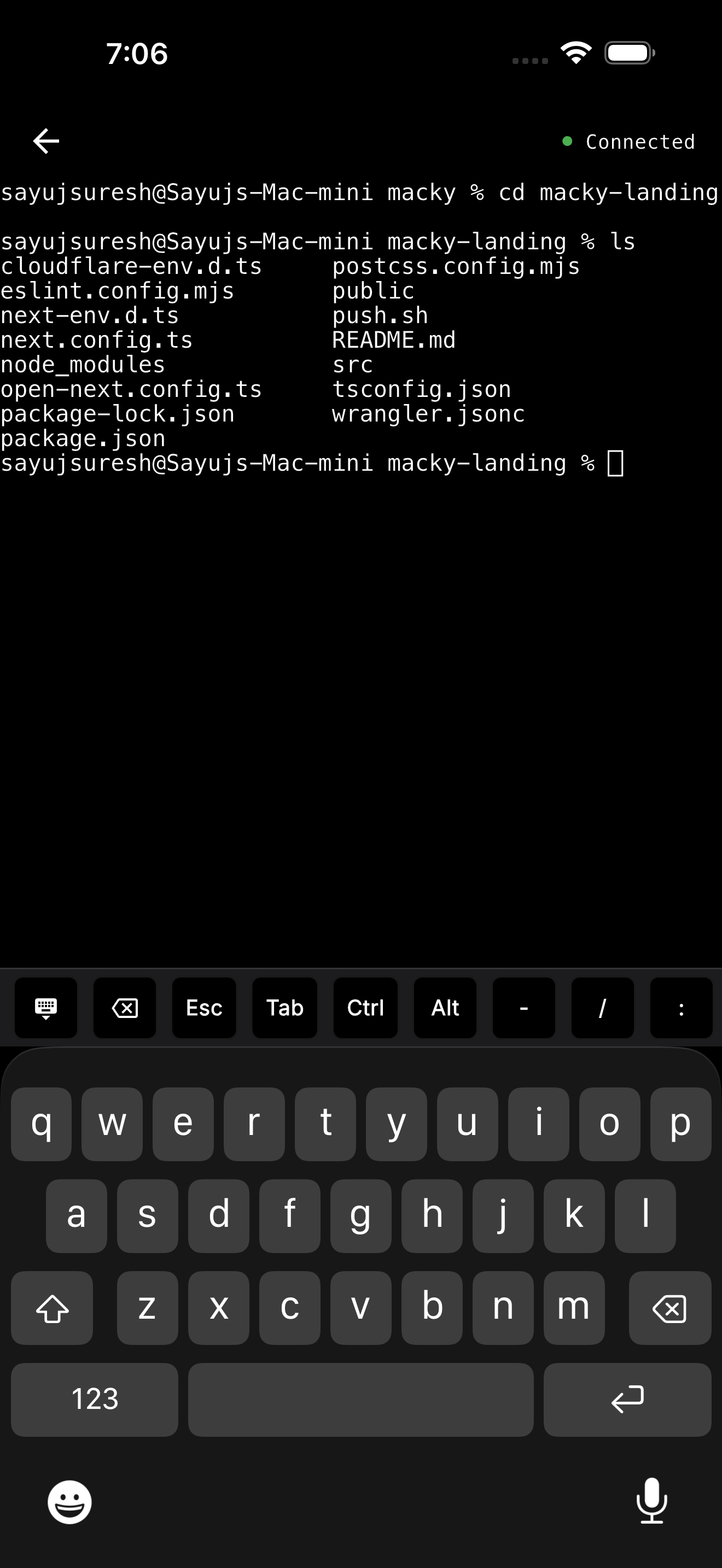
A key bar gives you Esc, Tab, and Ctrl. A master password protects the Mac, and each new iPhone must be approved on it. The host must be a Mac. For the protocol differences, read WebRTC vs SSH for Remote Terminal Access.
Moshi Alternatives
| App | Focus | Notes |
|---|---|---|
| Moshi | Agent-first | SSH, Mosh, or ET. Hosts on macOS, Linux, or WSL. |
| Blink Shell | Terminal-first | The first iOS Mosh client. A roundup lists it as paid only. |
| Termius | Fleet-first | Built around many hosts. |
| Prompt 3 (Panic) | Terminal-first | A roundup lists it as paid only. |
For a longer list, see Best iOS SSH Clients.
Which One to Pick
- Pick Moshi if you want Mosh, agent notifications, and a Linux or WSL host.
- Pick Blink or Prompt 3 if you want a terminal without the agent layer.
- Pick Termius if you manage many servers.
- Pick the Mac-only option above if you want your Mac's terminal and screen on your iPhone.
FAQ
Is the Moshi app free?
The App Store lists Moshi as Free with in-app purchases. Moshi's pages describe a free SSH terminal and a Pro tier. Sources disagree on whether Mosh is Pro-only, so check in the app.
Is Moshi the same as Mosh?
No. Mosh is a free software protocol for connections that survive network changes. Moshi is an iOS app that can connect over SSH, Mosh, or Eternal Terminal.
Which computers can Moshi connect to?
Moshi supports macOS, Linux, and Windows with WSL hosts. Macky works only with a Mac as the host.
What are the best Moshi alternatives on iPhone?
Moshi's own comparison pages cover Blink Shell, Termius, and Prompt 3. They also cover Secure ShellFish.
Do I need Tailscale to use Moshi?
One third-party review pairs Moshi with Tailscale. Your host has to be reachable from your phone either way.
Related Guides & Comparisons
Try Macky
Connect to your Mac terminal from your iPhone.