Does macOS Have Built-In Remote Desktop? Screen Sharing Explained
Yes. macOS has a built-in remote desktop called Screen Sharing. It lets another computer view and control your Mac's desktop, and Apple describes it for computers on your network.
If you want your Mac's screen on your iPhone, Macky does that. First, here's how the built-in option works.
How to Turn On Screen Sharing
On macOS 13 and later, follow these steps:
- Open System Settings > General > Sharing.
- Turn on Screen Sharing.
- Click the Info button.
- Choose who can connect. Pick "All users" or specific users in the "Allow access for" pop-up.
- Optionally turn on "Anyone may request permission to control screen."
Users & Groups includes all users of the Mac, so check that list before you pick "All users." With Screen Sharing off, other computers on your network can't connect.
What Screen Sharing Can Do
The remote user can open, move, and close files and windows. They can also open apps and restart the Mac. That covers most day-to-day remote desktop needs on a local network.
Connect from Another Mac
From another Mac, open the Screen Sharing app with Spotlight. You can also use Go > Connect to Server in Finder. Press Cmd+K and enter the address like this:
vnc://<mac-ip>Screen Sharing accepts VNC connections, so VNC clients can reach it too. That detail comes from third-party sources, not from Apple's own page. Our guide on Mac to Mac remote desktop walks through both local and internet setups.
Screen Sharing vs Remote Management vs Apple Remote Desktop
| Option | What it is | Cost |
|---|---|---|
| Screen Sharing | Built-in setting for viewing and controlling a Mac | Included with macOS |
| Remote Management | Built-in setting that works with Apple Remote Desktop | Included with macOS |
| Apple Remote Desktop | App for managing Macs on your network. It covers software distribution and remote help, plus reporting and automation. | $79.99 on the US App Store |
Screen Sharing and Remote Management can't both be on at once. Apple Remote Desktop version 3.10 adds macOS Tahoe 26 compatibility and requires macOS 15.5 or later. Prices vary by region. For a deeper comparison, read Apple Remote Desktop vs Screen Sharing vs Remote Management.
See Your Mac's Screen on Your iPhone
Macky puts your Mac's screen on your iPhone in Screen mode. You get a trackpad-style cursor with adjustable speed and scroll and drag modes. Left and right click buttons and an on-screen keyboard are included.
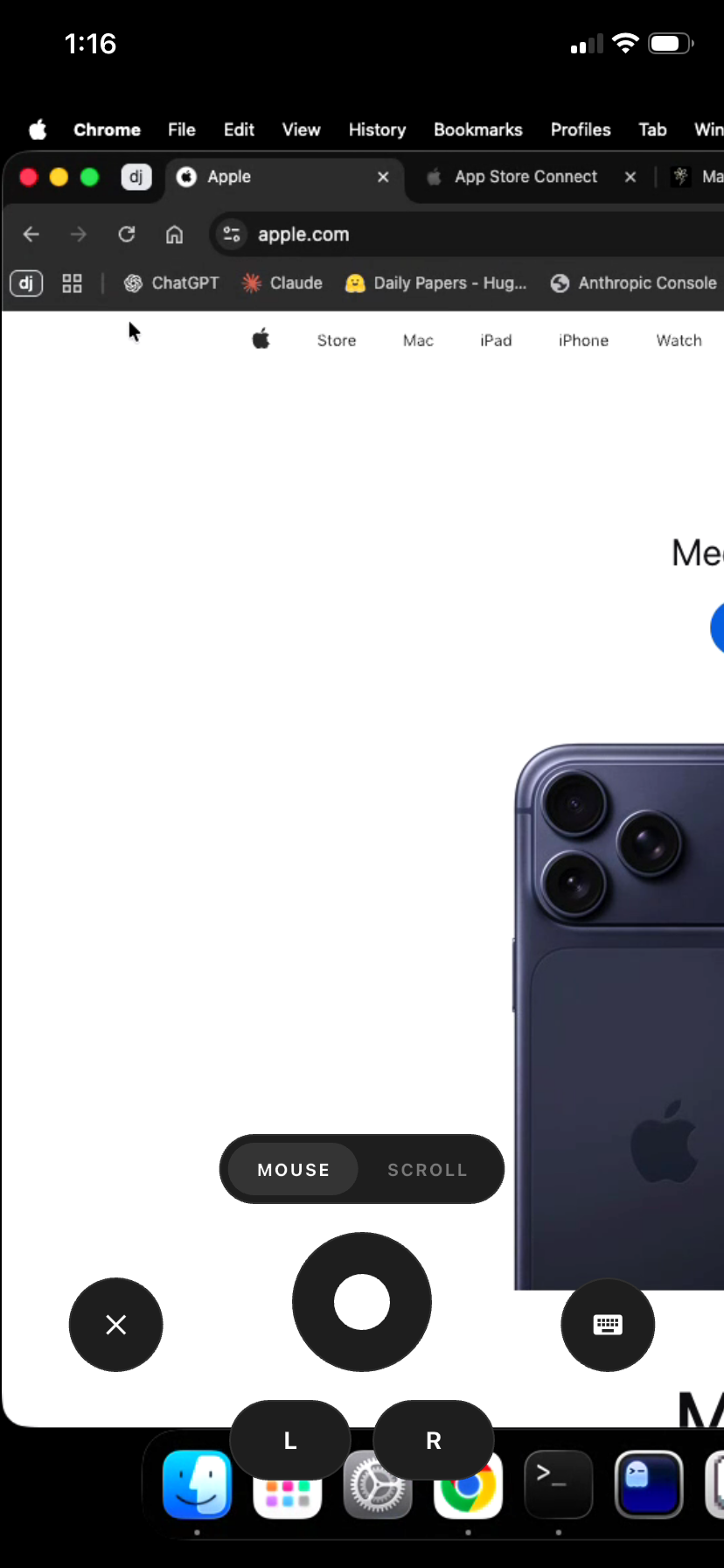
The connection is end-to-end encrypted WebRTC straight between your devices. There are no open ports on your network and no VPN to set up. A master password protects the Mac, and each new iPhone must be approved on the Mac first.
Gaps to Know About
Apple's Screen Sharing page talks about computers "on your network." It doesn't say how access over the internet works, so check Does Apple Remote Desktop Work Over the Internet? for that.
macOS also has no RDP server, per a third-party source. Windows has no built-in VNC viewer either. If you're coming from Windows, read Can You RDP into a Mac from iPhone or Windows?.
Where to Go Next
For third-party options, see Best Remote Desktop for Mac in 2026. If you only need a shell, How to SSH into a Mac covers Remote Login.
FAQ
Does macOS have a built-in remote desktop?
Yes. Screen Sharing is built into macOS. Turn it on in System Settings > General > Sharing and other computers on your network can view and control your Mac.
Is there a free version of remote desktop?
For Macs on your local network, Screen Sharing is included with macOS, so you don't need to install anything on the Mac you want to reach. Apple Remote Desktop is a separate paid app.
Can Screen Sharing and Remote Management be on together?
No. Apple says you can't have both on at the same time. Remote Management is the setting that works with Apple Remote Desktop.
Does macOS include an RDP server?
No. macOS doesn't ship an RDP server, according to a third-party source. Screen Sharing uses VNC instead. Our post on RDP into a Mac covers the options.
Related Guides & Comparisons
Try Macky
Connect to your Mac terminal from your iPhone.