Claude Code Remote Control vs tmux: Which Should You Use?
Remote Control gives you a chat-style window into a Claude Code session from claude.ai/code or the mobile app. With tmux, any process keeps running and you can reattach from any terminal. They don't compete much: the Claude Code docs say to start claude inside tmux or screen when you run it over SSH.
If you want the tmux side from your iPhone without extra setup, Macky opens your Mac's own terminal on your phone.
Remote Control vs tmux at a glance
| Remote Control | Using tmux | |
|---|---|---|
| What it is | A way to continue a local Claude Code session from another device | A terminal session manager that keeps processes alive |
| How you reach it | The Claude mobile app or claude.ai/code | Any terminal, usually over SSH |
| Works with other commands | Claude Code only | Any command |
| Account needed | A claude.ai login (API keys aren't supported) | None |
| If you close the terminal | The session ends | The session keeps running |
Which one to use
- Pick Remote Control when you want to approve prompts and read output from the Claude app.
- Pick tmux when you also want to run other commands, start new sessions, or keep a build going next to Claude.
- Pick both when
clauderuns on a server or a Mac you reach over SSH.
Remote Control runs as a local process. If you close the terminal or stop claude, the session ends. That's why tmux matters on a remote machine.
Reach your tmux session from your iPhone
Macky puts your Mac's terminal and screen on your iPhone. Its Terminal mode opens a real zsh or bash session on the Mac, so you can run tmux or claude there and attach or detach sessions.
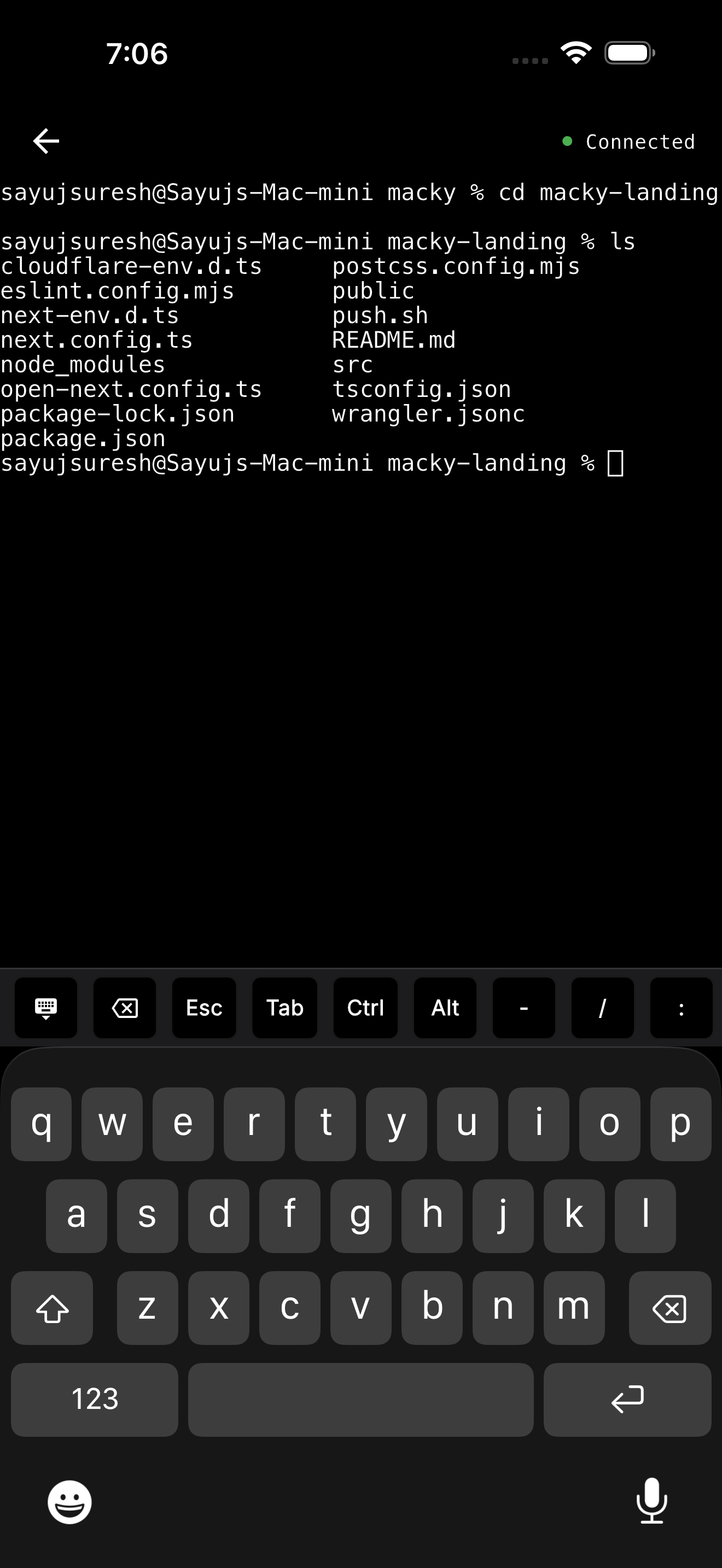
The key bar adds Ctrl, so the tmux prefix works. It also has Esc, Tab, and arrow keys. The connection is end-to-end encrypted WebRTC with no open ports and no VPN. For a walkthrough, read Claude Code on iPhone.
Run them together
Start a tmux session, then launch Claude Code with Remote Control inside it:
tmux new -s claude
claude --remote-control
Detach with Ctrl+b, then d. Come back later with tmux attach -t claude.
A GitHub issue reports this setup working on a headless Debian 12 VM over SSH and tmux, with "Remote Control active" in the status bar. Another issue says claude remote-control needs a TTY, so tmux or screen is the workaround on servers. For setup details, see Claude Code Remote Control: Setup, Limits and Fixes.
Limits to know
- Each interactive process supports one remote session at a time.
/pluginand/resumework only in the local terminal.- Bypass permissions mode isn't available from the phone.
FAQ
Is tmux best for Claude Code?
There's no official ranking. With tmux, any process stays alive and reattachable from any terminal, which fits long runs over SSH. Remote Control suits you when you want a chat-style view from your phone. Many people run both.
Can Claude Code be controlled remotely?
Yes. Remote Control lets you continue a local Claude Code session from claude.ai/code or the Claude mobile app. You can also reach the session through a terminal on the host machine, for example over SSH inside tmux.
Is Claude Code Remote Control secure?
According to the Claude Code docs, the local session makes outbound HTTPS requests only and never opens inbound ports. Check the Connection and security section of the live docs for current details.
Does Remote Control work with an API key?
No. API keys aren't supported. You need a claude.ai login. Remote Control is available on Pro, Max, and Ultra plans. Team and Enterprise plans work too, once an Owner enables the toggle in admin settings.
What if Remote Control isn't working?
Check your login, the environment variables, and your plan toggle first. The full list of errors and fixes is in Claude Code Remote Control Not Working? Every Error and Fix.
Related Guides & Comparisons
Try Macky
Connect to your Mac terminal from your iPhone.