Remote Managed Settings Failed to Load in Claude Code (2026)
Claude Code shows Remote managed settings failed to load (<cause>) when it can't fetch your organization's settings from Anthropic. The session keeps running without them. The text in parentheses tells you what failed.
If Claude Code runs on a Mac you can't sit at, Macky lets you read the warning and run the checks below from your iPhone.
What the Warning Means
Your session is eligible for server-managed settings, which is an admin feature. Claude Code tried to fetch them, or apply what the server returned, and failed. Anthropic's error reference lists it under network and connection errors. These usually come from your local network or proxy. A firewall or a cloud environment's network policy can cause them too.
What happens next depends on the cache:
- No cached settings: the session runs without server-managed settings and the line reads
no remote policy applied. - Cache still valid: Claude Code warns that the cached policy is in effect and fetches fresh settings in the background.
- Endpoint-managed settings: MDM or
managed-settings.jsonstill apply either way.
Read the Cause in Parentheses
| Cause in parentheses | What to do |
|---|---|
network error | Check your connection, proxy, and firewall. |
request timed out | Check your connection, then allow the endpoints below. |
authentication rejected (401) | Ask your admin to check your organization's setup. |
How to Fix It
- Make sure the machine is online.
- If you're behind a corporate proxy or firewall, allow HTTPS to the two endpoints below.
- Check whether a cache exists with
ls -l ~/.claude/remote-settings.json. - Start a new session. A later
Remote managed settings have now loadedmessage means the fetch worked.
api.anthropic.com/api/claude_code/policy_limits
api.anthropic.com/api/claude_code/settings
The docs add that a "could not connect" result can mean the reply came from a network proxy, not Anthropic. If you suspect that, ask whoever runs your network.
Check It From Your iPhone
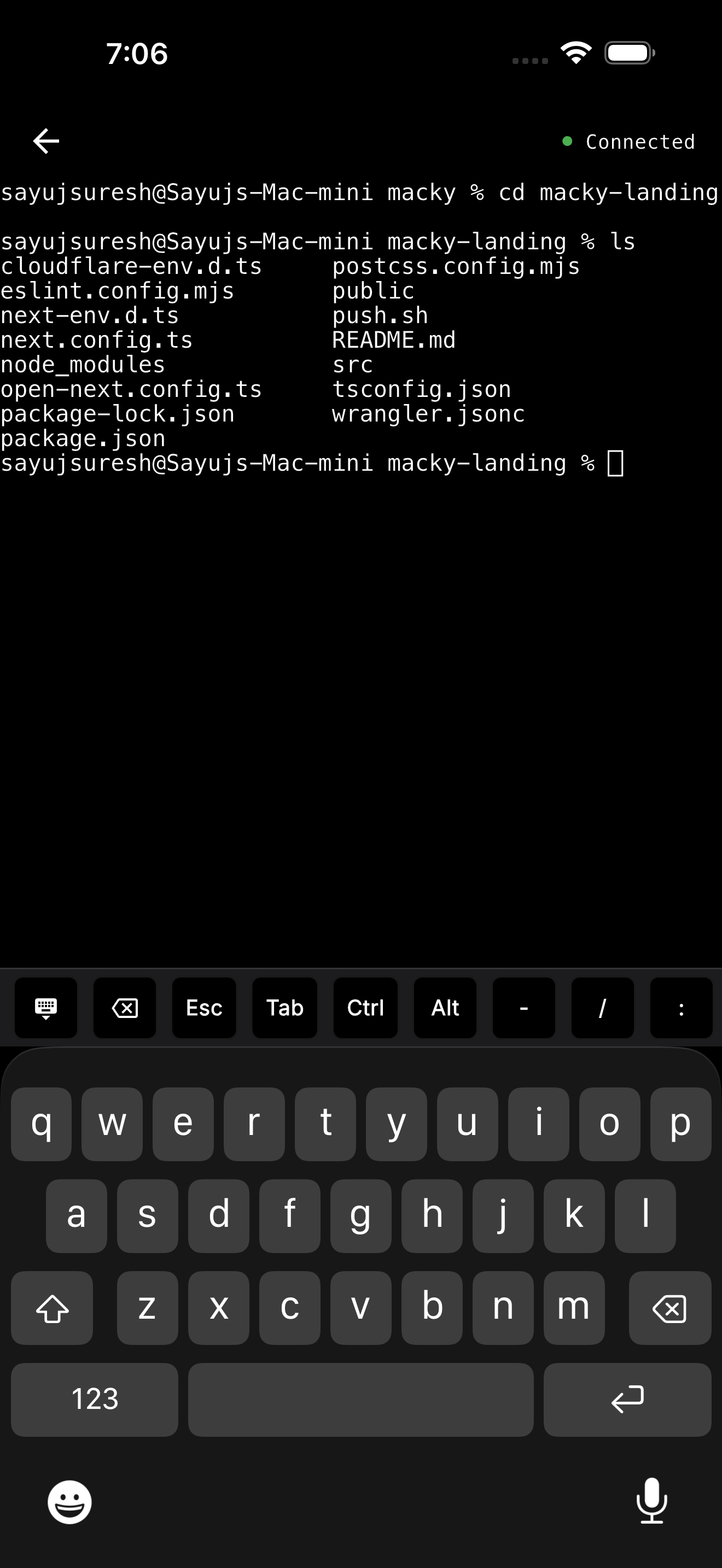
Macky puts your Mac's terminal and screen on your iPhone. You can open the session where Claude Code is running and see the exact warning text.
Macky connects end-to-end encrypted with no open ports. Run the cache check or restart the session without walking back to your desk.
Related Messages
| Message | Meaning |
|---|---|
Remote managed settings did not load | The fetch ended without an answer. |
Remote managed settings are still loading | The fetch hasn't finished yet. |
Remote managed settings have now loaded | Appears after an earlier warning. The settings arrived. |
Your organization requires remote managed settings to load, but they could not be loaded | The fail-closed variant. |
When Claude Code Exits Instead
If a managed source sets forceRemoteSettingsRefresh, Claude Code exits when the fetch fails. That setting comes from your admin's managed configuration, so ask them whether it's on.
Before v2.1.248, a failed fetch showed up only in the debug log. For other connection problems, see Claude Code Remote Control Not Working? Every Error and Fix (2026).
FAQ
What does "remote managed settings failed to load" mean in Claude Code?
Claude Code tried to fetch your organization's server-managed settings and couldn't, or couldn't apply what came back. The cause in parentheses names what failed, such as a network error or a timeout.
Can I keep using Claude Code after this warning?
Usually yes. The session runs without server-managed settings, and endpoint-managed settings still apply. The exception is fail-closed mode, where Claude Code exits if the fetch fails.
What does "no remote policy applied" mean?
It means no cached settings exist and the fetch failed, so the session has no server-managed policy.
Which endpoints does Claude Code need for managed settings?
Allow HTTPS to api.anthropic.com/api/claude_code/policy_limits and api.anthropic.com/api/claude_code/settings.
Where does Claude Code cache remote managed settings?
It's stored at ~/.claude/remote-settings.json.
Related Guides & Comparisons
Try Macky
Connect to your Mac terminal from your iPhone.